
We did a full day trip: Cala Saona, the wonderful cliff caves and then, under sail, to Ses Illetes. Carlos was friendly, warm and very attentive. He let me take the helm for a long stretch. Thank you for making this day so special.

Local guide to Formentera
What to see in Formentera: beaches, coves and places worth discovering by boat
Formentera has 69 km of coastline and some of its best spots can only be reached by sea.
Here we tell you which they are, how to get there and what makes them special.
★★★★★
/5 on Google · 350+ private sailing trips
Scroll
Book your trip in minutes
Tell us the date and number of people. Carlos confirms in minutes.
Formentera as told by someone who sails it every day
Formentera is not just Illetes and the turquoise water from the photographs. It has 120-metre cliffs at La Mola, posidonia seabeds declared a UNESCO World Heritage Site, coves with no road access and hidden spots that change depending on the day and the wind.
We’ve been sailing these waters for years. We know which places are best in the morning, which ones come into their own with easterly wind and which only appear when the tide drops. This page shares what we have learnt about what to see in Formentera — with real information, not brochure phrases.
If any of these spots catch your eye, many of them are regular stops on our private sailing trips.
Four coastal zones — the wind decides which one
Formentera’s coastline is divided into four distinct zones. Each has its own character, seabeds and best times of day. We sail to one or another depending on the wind and sea conditions each day. That’s not a limitation. That’s real sailing.

Poniente zone
West coast · Facing the sunset
West
Espalmador · Illetes · Cala Saona · Cueva Rosa · Cap de Barbaría
The most frequent zone. Facing sunset. Sheltered waters when easterly wind blows. Sailed with winds from the east (levante, gregal, xaloc).
East component winds. Levante, Gregal, Xaloc
Levante zone
East coast
East
Espalmador · Illetes · Cala en Baster · Punta Prima · Es Caló
Posidonia, sand and rock seabeds. Good for snorkelling. Sailed with winds from the west (poniente, mestral, llebeig).
West component winds. Poniente, Mestral, Llebeig
Tramuntana zone
North coast · The wildest
North
Es Caló · Racó de sa Pujada · Cala en Baster · La Mola cliffs
The wildest coastline. Cliffs, rocky seabeds, caves, places that don’t appear in any guide. Sailed with winds from the south (migjorn, llebeig, xaloc).
South component winds. Migjorn, Llebeig, Xaloc
Migjorn zone
South coast · Nearly 5 km of continuous coast
South
Migjorn · Arenals · Caló des Mort · Estufadors
The least crowded zone. Calm sea with northerly wind. Sand, seagrass and rock seabeds — ideal for snorkelling. Sailed with winds from the north (tramuntana, mestral, gregal).
North component winds. Tramuntana, Mestral, GregalThe zones depend on the wind and sea conditions. We decide each day which is the best option based on real weather and sea data.
Choose your format to discover Formentera by boat:
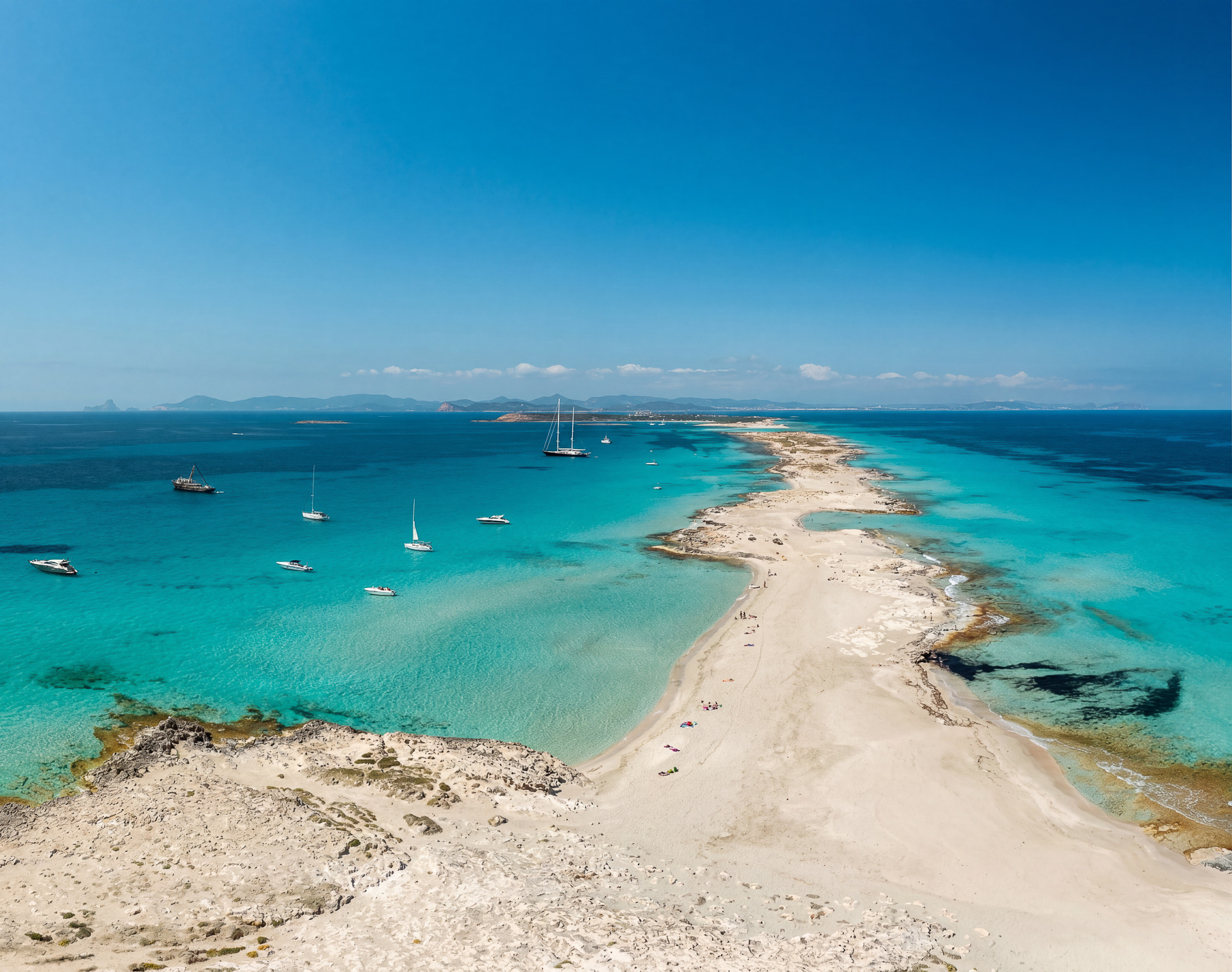
Illetes — Formentera’s most iconic beach
Illetes is Formentera’s postcard. A strip of white sand roughly 450 metres long with sea on both sides. The most striking thing about Illetes is the view from the water: the narrow beach with the sea either side and the silhouette of Espalmador in the distance. That’s something you can only really take in on foot.
From the water, Illetes has two very different faces. On the Poniente side (west coast), the constant ferry traffic between Formentera and Ibiza creates swell and makes anchoring uncomfortable. There are many boats and a lot of movement. That’s why, on Poniente days, we tend to head straight to Espalmador — far more peaceful for anchoring.
On the Levante side (east coast) it’s a different story. When westerly winds blow, that area becomes sheltered — no ferry traffic, no swell and much more calm. That’s where we like to anchor — it’s a completely different experience.
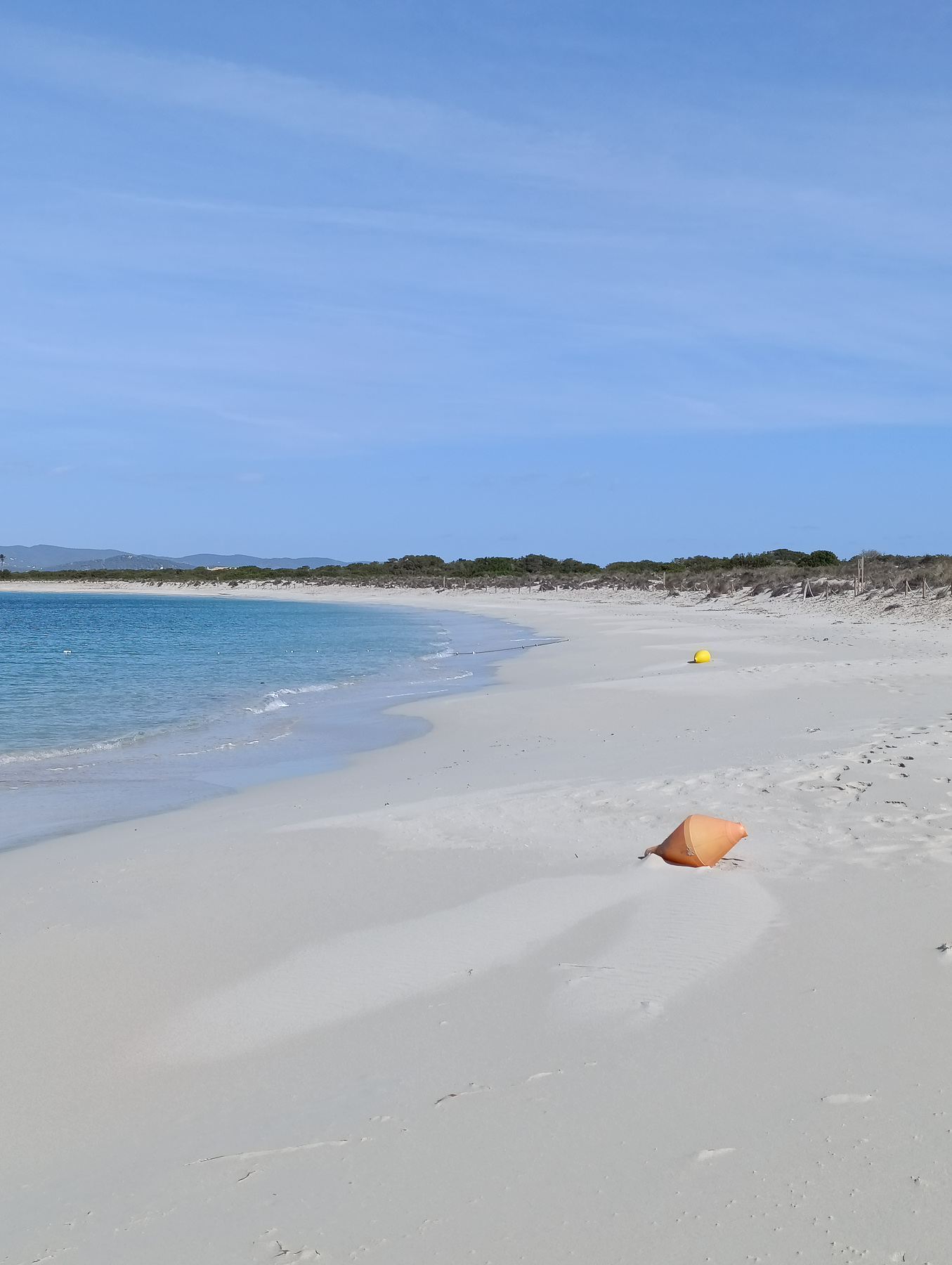
Espalmador — the uninhabited islet north of Formentera
Espalmador is a 137-hectare islet north of Formentera, protected as a Natural Park. The water ranges from turquoise to emerald green. The seabed is posidonia and white sand.
We usually visit Espalmador when sailing the Poniente zone. On full day trips there is more time, and we like to head there around lunchtime. We reserve a mooring buoy inside the bay and spend a good while there, at our own pace.
The best part of Espalmador is going ashore. The sand is brilliantly white, the beach is usually quiet and inside the bay the swell is minimal. You can go ashore swimming, by paddleboard or by tender. From there you can walk along the marked path through the interior of the island to the lagoon.
From the Levante side (when westerly winds blow), Espalmador has another face: wilder, more rocky. Ideal for snorkelling — the seabeds have more relief and more marine life than in the bay area.

Cala Saona — crystal-clear water and sunset on the west coast
Cala Saona is on the west coast of Formentera, within the Poniente zone. It’s a cove about 140 metres wide with fine sand, reddish sandstone walls and a seabed that drops more steeply than at Illetes. The water is deep and crystal-clear. Facing west, the sunset hour makes this one of the most special spots on the island.
It’s a very sandy area, but as you move towards the rocks and cliffs the seabed changes and there is much more marine life. Towards Cap de Barbaría, in the areas surrounding Cala Saona, there is a cave zone ideal for snorkelling. You can swim inside the caves and explore the nooks — it’s one of the experiences that surprises people most.
A possible route: Cala Saona, visiting the caves, on to Espalmador and back. Always subject to the wind and sea on the day.
Migjorn — the least-crowded zone of Formentera
Migjorn is the entire south coast of Formentera. A strip facing south that runs from Es Arenals to the Estufadors area, before the La Mola lighthouse. It’s the least-visited zone on the island and one of the calmest for sailing.
When northerly wind blows, Migjorn is sheltered and the sea is far calmer. That’s why we choose this zone on those days — calm sea, few boats and spots all to yourselves.
The seabed is sand, seagrass and rock, with plenty of marine life. It’s ideal for snorkelling. Sailing through this zone we may visit Es Arenals, Caló des Mort (past the Es Arenals beach heading towards La Mola), and the Estufadors area, where there are cliffs, small caves and beautiful hidden spots. If conditions allow, we can even reach the La Mola lighthouse.
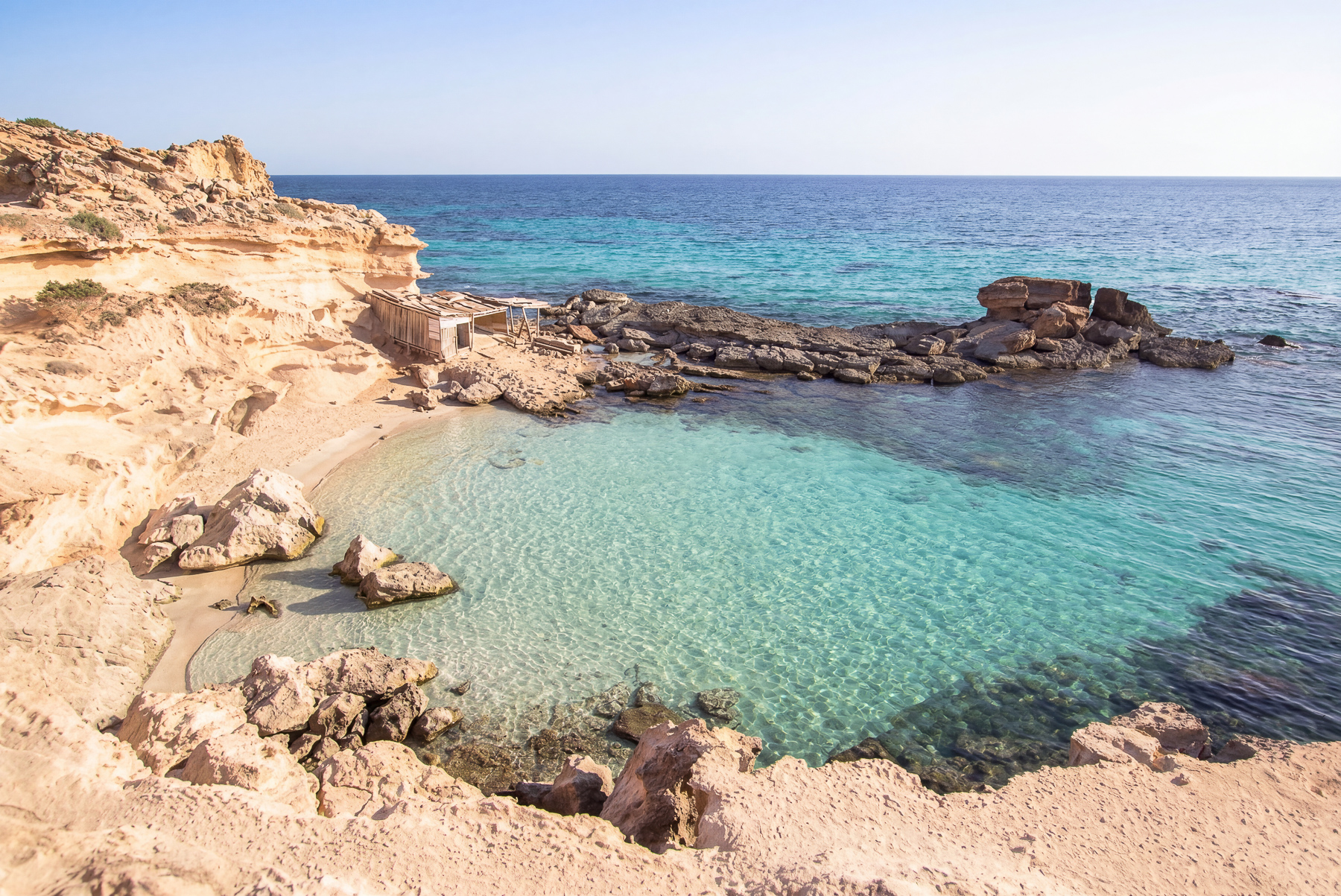
Caló des Mort — Migjorn’s hidden cove
Caló des Mort is a small cove tucked between rocks in the Migjorn zone, past Es Arenals beach heading towards La Mola. It’s about 15 metres wide and sheltered from swell by natural limestone walls. Road access exists but is long and poorly signposted. From the water it’s much simpler.
The seabed is sand with loose rocks and posidonia. The water is very calm when the southern sea is settled. It’s a place to linger, swim and snorkel without rushing.

Es Caló and Racó de sa Pujada — posidonia seabeds and wild coastline
Es Caló de Sant Agustí is a small fishing harbour on the north coast of Formentera. Crystal-clear water among the rocks, wooden slipways, the unhurried feel of a place that hasn’t been overrun yet.
The Es Caló area is generally very sandy, but where it meets the rock there is a great deal of marine life. It appears in both the Levante and Tramuntana zones depending on the day’s route. The seabeds off Es Caló are among the best in Formentera for snorkelling: rocks with algae, sea urchins, shoals of fish and visibility that can exceed 15 metres on good days.
Racó de sa Pujada is very close to Es Caló. It’s a nook with a cave, lots of rock, cliffs and a small sandy cove where you can go ashore and spend some time in this beautiful hidden spot. It’s one of those places you can only find by sailing.
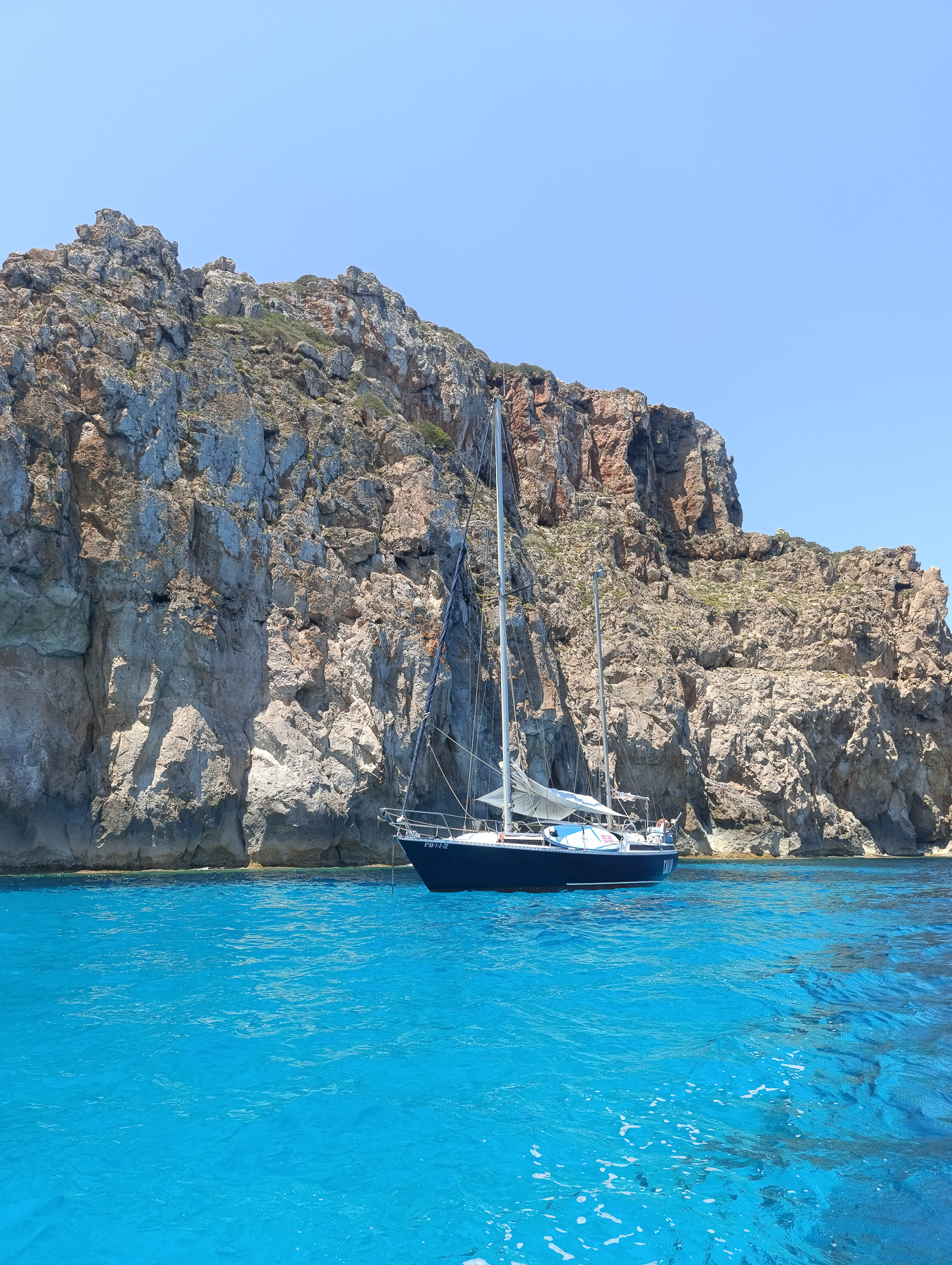
La Mola cliffs — Formentera’s wildest coastline
The La Mola cliffs are the northern face of Formentera’s eastern plateau. Vertical walls up to 120 metres tall dropping straight into the sea. The blue of the water here is more intense and deeper than at the northern beaches. This is the Formentera that doesn’t appear on postcards.
From the boat you can see sea caves, rock formations eroded over millennia and stretches of coastline with no road access. It’s a very rocky zone with seagrass, but there are some sandy areas where you can drop anchor. The most spectacular features are the hidden nooks: there are tunnels, curious formations and seabeds ideal for diving and exploring.
This is part of the Tramuntana route, which we sail when southerly wind opens up this coast.
Why visit these beaches and coves by sailing boat
Not every beach in Formentera has a road. And not all of its best spots can be seen from land. There are places that can only be reached by sea — and the view, the panorama and the feeling of arriving by sailing boat give Formentera another dimension altogether.
By sailing boat you reach places the scheduled boats don’t go. You anchor where there is space and calm. You don’t share the boat with anyone: the CALIU is exclusively for your group, up to 7 passengers, with Carlos at the helm.
Access to spots with no road
West coast caves, stretches of Migjorn, La Mola nooks, Racó de sa Pujada. Only from the water.
No crowds
Private trips, not shared. We anchor where there’s space and peace.
Your pace
If the snorkelling is great, you stay. If you want to keep sailing, you sail. No fixed group timetables.
Carlos knows these waters
He has been sailing them for years. He knows when easterly wind opens up the west and which zone has the best sea each day. Wind isn’t a problem — it’s information.
Sail these zones with IATU BOATS — private sailing trips from May to October
The routes depend on wind and sea
The sea and wind are in charge. We always sail through the zones with the best conditions for a safe and enjoyable experience.
Carlos makes the decision each morning, with real weather data and his knowledge of these waters. It’s not an inconvenience — it’s part of sailing properly. More often than not, the zone the conditions open up turns out to be the group’s favourite.
The meeting point is confirmed 2–3 days before departure, based on weather conditions.

Es Vedrà — a special route from Formentera
Es Vedrà is a volcanic islet off the south-west coast of Ibiza. From the water it looks like a rock rising directly from the sea — cliffs, swell, no sand or shore.
Sailing to Es Vedrà from Formentera is a longer outing and depends entirely on the sea and wind conditions on the day. It’s not a standard CALIU route — it’s something we can consider when the wind and sea allow and the group requests it.
If you’re interested in this route, let us know when booking.
Choose your sailing trip in Formentera
Now you know what to see. Choose how many hours you want to give it.
Frequently asked questions about what to see in Formentera by boat
The most special places in Formentera are only accessible by water: the Illetes beach with its white sandbar, the uninhabited islet of Espalmador (137 hectares of protected land), the rocky seabeds of Es Caló, Caló des Mort and stretches of Migjorn with no road. There are also sea caves on the west coast (Poniente zone) and the La Mola cliffs, with walls up to 120 metres high. The CALIU sails away from the usual tourist circuits — the route adapts to the wind and sea on the day.
The most accessible and spectacular beaches from the boat are Illetes (white sand, turquoise water, 450 metres long), Espalmador (uninhabited islet with shallow seabeds), Cala Saona (west coast, great snorkelling) and the Migjorn strip (nearly 5 km of continuous south coast). Each belongs to a different sailing zone and the choice depends on the wind on the day.
The best snorkelling spots reachable from the CALIU are: the Cala Saona caves (relief seabeds with fauna), Es Caló and Racó de sa Pujada (rocky seabeds with posidonia, visibility up to 15 metres), Cala en Baster, the La Mola cliffs and Estufadors. We anchor in the zone with the best visibility based on conditions.
Yes. Espalmador is roughly 30–45 minutes’ sailing from the usual departure areas. It may be visited from the Poniente or Levante zone, depending on the wind. It works best on full day and afternoon + sunset trips, as shorter formats have less time available. The skipper makes the decision each morning based on actual sea conditions.
You can mention your preferences when booking and we take them into account. The final route always depends on the wind and sea that day. We know these waters well and choose the option with the best conditions and most possibilities for enjoyment, bearing in mind what you’d like to see.
The season in Formentera runs from May to October. The central months (July–August) are the warmest and calmest for the sea. Early season (May–June) has fewer visitors, pleasant temperatures and better wind conditions for sailing. September and October offer the warmest sea of the year and the island with fewer tourists.
There is much more beyond Illetes and Cala Saona. The La Mola cliffs (Tramuntana zone) are wild coastline with no land access. Caló des Mort is a hidden cove at the far end of Migjorn. The Es Caló seabeds are among the island’s best for snorkelling. And Espalmador, although well known, feels entirely different when you arrive by sailing boat with no rush. Carlos knows spots that don’t appear in any guide.
The meeting point is confirmed 2–3 days before departure, based on weather conditions. It depends on the wind and sea that day. We send all the details in advance.
Discover Formentera by sailing boat
Now you know what to see. Come and discover these beaches, coves and hidden spots from the water. Private sailing trips, May to October. Up to 7 passengers. Carlos at the helm.